If you’ve ever held a shiny ring and wondered, “Is this real gold?” – welcome. This clear, friendly, and deeply practical guide answers gold plated vs solid gold the way a trusted jeweler in your pocket would: no hype, no fluff, just what matters for rings, bracelets, pendants and earrings. We’ll give you the tech, the tests, the cost ranges, style tips, and local buying tricks so you can shop confidently in New York, New Jersey, Texas, California, Florida – and everywhere online.
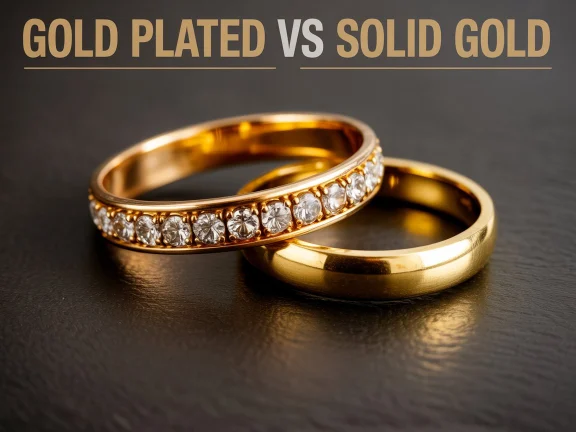
Solid gold = real gold throughout. Durable, resizable, heirloom-worthy. Buy for engagement rings and pieces you’ll wear daily.
Gold plated = thin gold layer over base metal. Affordable, trendy, but the finish can wear off. Great for fashion pieces you’ll rotate.
Gold-filled / vermeil = the smart middle ground – thicker gold layer, longer-lasting, great value if you want longevity without the full solid-gold price.
(We’ll explain how to tell them apart, how much they cost, and exactly what to buy for the piece you want.)
What “gold plated vs solid gold” really means
Let’s make this practical. When comparing gold plated vs solid gold, you’re comparing three things:
What the piece is actually made of (gold all the way through vs a core metal with a gold layer),
Durability (how long it will look like gold), and
Value (resale, repairability, heirloom potential).
Solid gold: the entire item is a gold alloy (e.g., 14K, 18K). It’s repairable, resizable, non-reactive with most skin types, and carries intrinsic value. Gold plated: a base metal (brass, copper, or sometimes silver) covered with a very thin layer of gold via electroplating. Attractive on day one; may show the base metal over time. Gold-filled / vermeil: significantly thicker gold layer than plated; vermeil uses sterling silver as the base and has minimum micron rules; gold-filled is mechanically bonded and much more durable.
How to tell gold plated vs solid gold (at home & with experts)
People ask this a lot: how to tell gold plated vs solid gold? Here are safe, practical tests.
1) Look for the hallmark first (fastest)
Solid gold: stamped 10K, 14K, 18K, 750, 585, or 417.
Gold-filled: often stamped “GF” + karat (e.g., 14K GF).
Vermeil: sometimes marked “VERMEIL.”
Gold-plated: may show GP, GEP, HGP or no stamp.
Important: stamps can be faked. If it’s valuable, get a pro check.
2) Magnet test (quick & free)
Gold is not magnetic. If a magnet strongly attracts the piece, it contains magnetic base metal — likely not solid gold. This test is helpful but not definitive (some base metals aren’t magnetic).
3) Visual wear & edge inspection
Look at edges, prong bases, inside rings. If a different color shows through, it’s plated. Solid gold patinas gently — it doesn’t “peel” to reveal a different metal.
4) Weight & feel
Solid gold is dense and feels heavier for its size. Compare a similar-looking plated piece; the solid will usually feel more substantial.
5) Professional tests — the gold standard
XRF (non-destructive): very accurate elemental analysis used by jewelers.
Acid test: a small scratch and acid drop; accurate but invasive. Leave this to pros.
Appraisal/X-ray: for high-value items, professional verification is recommended.
Gold filled vs gold plated vs solid gold — which should you buy?
Ask yourself: Will I wear it every day? Do I want this to be an heirloom? Is budget the limiting factor?
If you’re comparing similar-looking pieces, focus on metal stamp, return policy, and repair/resizing terms — they matter more than the initial price tag.
Which is better for rings, bracelets, pendants, earrings?
Rings (daily wear): Solid gold or gold-filled. Plating wears fastest on high-contact surfaces like rings.
Bracelets & chains: Solid or gold-filled for heavy use; plating ok for occasional wear.
Pendants & necklaces: Gold-filled or solid depending on frequency. Chains rub and can show wear.
Earrings (sensitive ears): Solid gold or vermeil/gold-filled — plated pieces can irritate once plating wears.
Studs & huggies: Gold-filled or solid gold preferred for comfort and longevity.
Care & maintenance: keep your pieces looking fresh
Whether plated or solid, treat your jewelry kindly:
Plated: remove before showering, swimming, exercising, and applying perfume. Store separately. Re-plate when finish wears.
Gold-filled & solid: clean with warm water, mild soap, and a soft brush; polish with a jeweler’s cloth. Inspect prongs and clasps annually.
Pro move: include a care card and offer a replating service for plated lines — customers appreciate the transparency and aftercare.
Allergies & skin sensitivity — what to choose?
Solid gold (14K+) is least likely to irritate.
Gold-filled is usually safe for sensitive skin.
Plated can cause reactions if the base metal contains nickel or the plating rubs away.
If sensitivity matters, ask the seller about nickel-free or stainless steel bases in plated pieces.
Resale, sustainability & investment value
Solid gold retains intrinsic metal value and can be recycled/resold. It’s an investment.
Gold-filled & vermeil: modest resale value, but still more valuable than plated.
If sustainability matters to you (it often does to our customers in NYC & CA), opt for lab-grown stones + solid or responsibly sourced gold.
Common buyer questions – quick, honest answers
Q: How to tell gold plated vs solid gold at home? A: Look for hallmarks, try the magnet test, check for color wear, and when in doubt get a pro XRF test.
Q: Is gold-filled or gold-plated better? A: Gold-filled. It’s thicker, lasts longer, and is better for everyday wear.
Q: Should I buy plated if I want a nice look but low cost? A: Yes — if you accept that it’s a fashion piece and plan to re-plate or replace it later.
Q: Are gold-plated engagement rings a thing? A: Not recommended. Engagement rings need durability and resizability — choose solid gold or high-quality solid alternatives.
Real-world scenarios (friend vibe)
Want a gorgeous seasonal statement necklace for a birthday trip? Buy plated — it’ll look amazing for a while.
Getting engaged? Buy solid 14K -the ring should be able to be resized, re-polished, and passed down.
Want a daily chain that won’t darken? Go gold-filled or 14K solid.
How Human Design Shop helps
We design jewelry that balances craftsmanship and ethics. If you’re shopping for a ring, bracelet, or pendant and don’t know which metal to pick, book a free virtual consult with our design team. We’ll show you examples (solid 14K, vermeil, gold-filled), explain long-term costs, and run through resale and care considerations specific to where you live.
If you want jewelry that lasts and carries value – choose solid gold for pieces you’ll wear daily, and gold-filled for durable, affordable alternatives. Use gold plated thoughtfully for trends and short-term looks.
Think of plated jewelry as the fashion playground – fun, changeable, and inexpensive. Think of solid gold as the family heirloom – meaningful, expensive, and endlessly wearable. See us on Instagram.