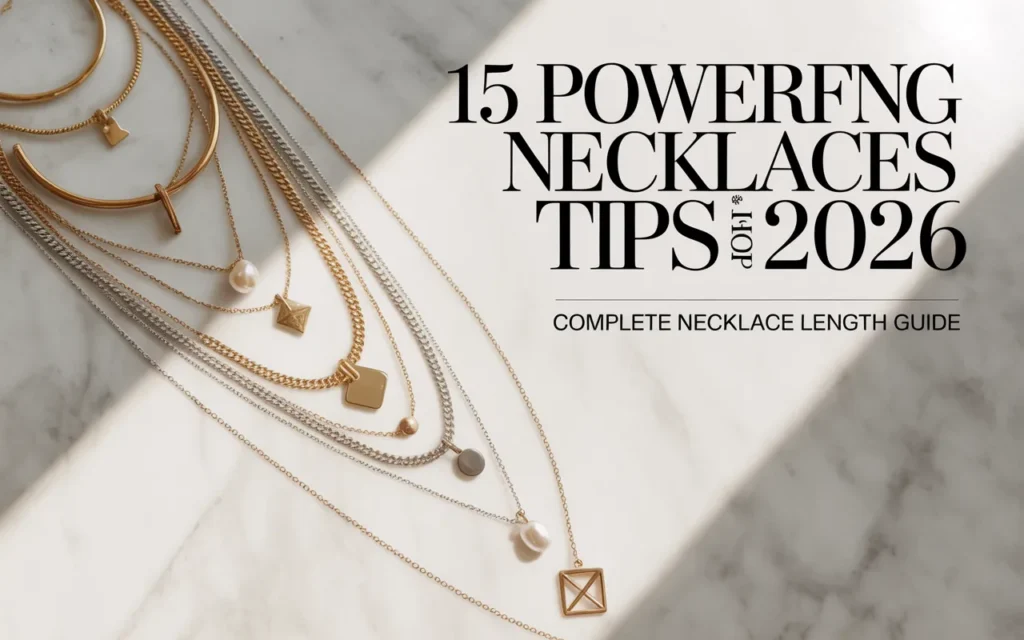
Layering jewelry in 2026 is about precision, balance, and intentional styling. These expert layering necklaces tips will help you master proportions, understand spacing, and confidently learn how to stack jewelry for everyday wear, office looks, and special occasions.
If you’ve been searching for a practical necklace length guide that actually explains ratios and styling formulas, this expanded guide covers everything professionals use.
Why Necklace Layering Is a Major Trend in 2026
Minimalism is evolving. Instead of wearing one heavy necklace, fashion-forward styling now focuses on curated stacks that tell a story.
Layered necklaces:
- Add depth to simple outfits
- Highlight collarbones and neckline
- Allow personalization
- Work across casual and formal settings
- Elevate capsule wardrobes
However, random stacking looks messy. That’s why following structured layering necklaces tips is essential.
The 4–6–8 Spacing Formula (Technical Breakdown)
When learning how to stack jewelry, spacing is everything.
Each necklace should sit approximately:
- 4–6 cm (1.5–2.5 inches) apart
- Never overlapping heavily
- Never sitting at the exact same drop point
Why This Works
Proper spacing:
- Prevents tangling
- Creates vertical flow
- Makes each layer visible
- Keeps pendants from clashing
Example Balanced Stack
- 14″ choker
- 16″ princess chain
- 18″ pendant
- 20–22″ textured chain
This is the safest beginner formula in any necklace length guide.
The 60–30–10 Styling Ratio (Pro-Level Secret)
Most blogs skip this.
Professional stylists follow this visual proportion rule:
- 60% delicate chains
- 30% medium-texture chains
- 10% bold or statement
This ensures the stack feels luxurious instead of chaotic.
For example:
✔ Two thin gold chains
✔ One paperclip chain
✔ One small statement charm
Balanced. Modern. Elegant.
Complete Necklace Length Guide (2026 Edition)
Understanding necklace lengths is fundamental before applying layering necklaces tips.
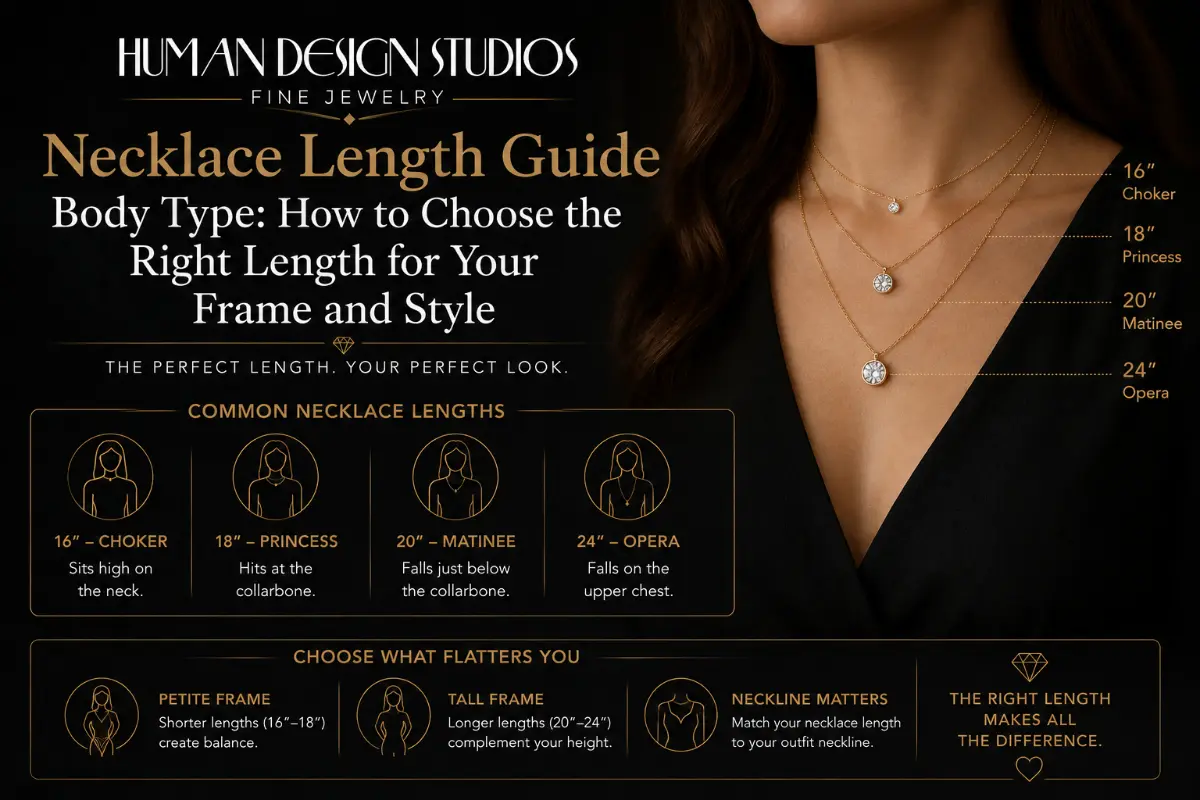
14″ – Choker
Sits tightly around the neck. Best for high necklines and strapless outfits.
16″ – Princess Length
Most versatile everyday length. Falls at collarbone.
18″ – Standard Length
Perfect for pendants and mid-layer positioning.
20–22″ – Matinee
Adds depth. Ideal for office styling.
24″+ – Opera
Dramatic and statement-focused.
Pro Tip:
Avoid placing two heavy pendants at the same length. It breaks visual symmetry.
How to Stack Jewelry According to Body Type
This is rarely discussed but very important.
Petite Frame
- Avoid overly long opera chains
- Stick to 14″–20″ layering
- Keep pendants small
Tall Frame
- Longer layers (20–24″) look balanced
- Can carry bold statement elements
Broad Shoulders
- Use V-shaped pendants
- Avoid extremely short chokers
Slim Neck
- Layer multiple shorter chains
- Add texture to create dimension
Understanding your proportions enhances every layering necklaces tips strategy.
How to Stack Jewelry Based on Neckline
Your neckline determines your stacking success.
V-Neck
Follow the V shape with graduated pendant drops.
Crew Neck
Place a 14″–16″ above neckline. Let longer chains sit on fabric.
Button-Down Shirt
Open 1–2 buttons. Stack 16″, 18″, and 22″.
Strapless
Focus on collarbone highlighting with shorter layers.
Matching your neckline makes your necklace length guide more effective.
Occasion-Based Layering Necklaces Tips
Everyday Minimal Stack
- 2 thin chains
- 1 small charm
- Same metal
Clean and wearable.
Office-Appropriate Stack
- 16″ + 18″ + 20″
- Avoid noisy charms
- Stick to one metal tone
Date Night / Evening
- Add gemstone sparkle
- Limit to 3 layers
- Introduce one bold accent
Vacation / Resort
- Mix metals
- Add shells or beads
- Slight asymmetry works
Advanced Layering Techniques (2026 Upgrade)
If you already know basic how to stack jewelry methods, try these:
1. Lariat Layering
Place a lariat as middle focal layer for vertical elongation.
2. Reverse Focal Point
Use bold chain at top instead of bottom.
3. Mixed Width Stacking
Thin + medium + bold creates depth.
4. Asymmetrical Pendant Placement
Keep pendants at slightly different drops for modern feel.
Metal Mixing Strategy for 2026
Gold + silver mixing is mainstream now.
Follow this rule:
- 70% dominant metal
- 30% secondary metal
- 1 transitional piece
Rose gold works best as accent, not base.
Psychology of Layering Jewelry
Jewelry layering impacts perception.
- Thin layers = refined, elegant
- Bold chains = confident, powerful
- Mixed textures = creative personality
- Pearls + chains = modern feminine
Your stack communicates mood without words.
9 Common Necklace Layering Mistakes
- Same thickness chains
- Same length stacking
- Too many pendants
- Ignoring neckline
- Over 5 layers
- Tangled chains
- Heavy pendants at same drop
- No spacing formula
- Overmixing metals
Avoid these to master layering necklaces tips properly.
Beginner Layering Formula (Quick Start)
If confused, start here:
- 16″ thin chain
- 18″ small pendant
- 20″ textured chain
This combination follows spacing, proportion, and balance rules from this necklace length guide.
FAQs
How many necklaces should you layer in 2026?
Three layers are ideal. Four works if spacing is correct.
What necklace lengths layer best together?
14″, 16″, 18″, and 20–22″ provide natural vertical spacing.
Can I mix gold and silver necklaces?
Yes, but follow the 70/30 rule for balance.
How do I stop layered necklaces from tangling?
Maintain 4–6 cm spacing and avoid identical chain styles.
Final Thoughts
Mastering layering necklaces tips in 2026 requires structure, proportion awareness, and smart styling choices. When you follow a proper necklace length guide and understand exactly how to stack jewelry, your layers look intentional instead of random.
Layer with balance.
Stack with strategy.
Style with confidence.